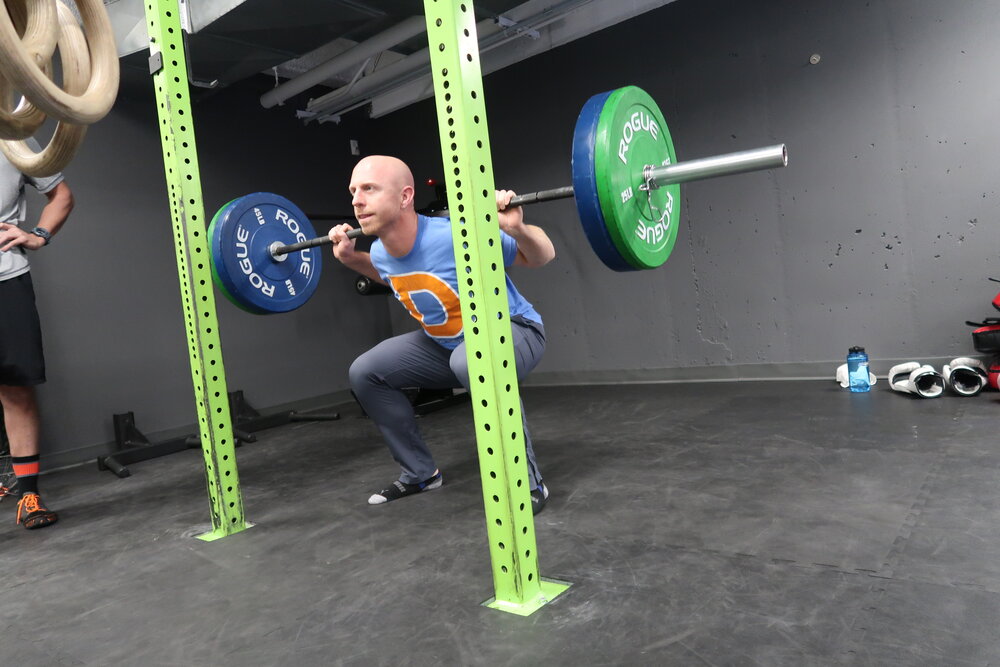
The Elephant in the Room by Coach JoelThe new year is in full swing and hopefully so is your full body mobility overhaul! If you’ve been disciplined with your daily maintenance routine then I know you’re feeling the positive effects in your movement and mobility. If you haven’t made the gains you were hoping for yet, remember that daily consistency will lead to long-term change, stay after it. There may also be a deeper rooted issue here that could be hindering your progress. Curious to know what that may be? One of the greatest enemies in our society is inactivity and prolonged sitting. We’ve all heard that “sitting is the new smoking.” The person accredited with that phrase is Dr. James Levin director of the Mayo Clinic-Arizona State University. Many other experts have come to the same conclusions based on a multitude of research. A 2008 Australian study reported that for every hour sitting watching TV after the age of 25 reduces the viewer's life expectancy by almost 22 minutes. Dr. Levin concludes that for every hour we sit and watch TV we lose two hours of life. The actual number may not be concrete, but the point is we’re reducing our life span from prolonged sitting. Adding to the list of harmful outcomes is its effect on our bodies and basic life functionality. Our bodies adapt to the position(s) we assume daily. Have you ever tried to hold yourself in a perfect squat position maintaining a neutral spine with glutes and quads active? If you haven’t, test it now and see how long you can hold perfect form before losing it. When we’re sitting, we’re mimicking a squatted position. Trying to actively hold perfect form while sitting for prolonged times is nearly impossible. Our bodies then find and hold positions that expend the least amount of energy, which usually resembles looking something like the Hunchback of Notre Dame. If we assume a poor position constantly, then our bodies begin to make it permanent and this can negatively impact our movement function and daily well being, resulting in mobility restriction, discomfort and pain. “Well I’m glad I exercise then!” Although the benefits that come along with exercise are numerous, it’s not enough to correct the ramifications from prolonged sitting and here’s why. We know that eating fast food for every meal, smoking cigarettes and/or drinking alcohol everyday is very unhealthy. Adding exercise into that unhealthy lifestyle does not undo the effects of those activities. We’ve also established that prolonged sitting is unhealthy too, so why would we think that exercise alone would somehow undo hours of sitting? Living a healthier lifestyle requires us to stop or at least limit eating processed foods, smoking, drinking, sitting, sleeping less and other habits that negatively impact our longevity and quality of life. Where’d we go wrong? Unfortunately it probably began were we first started sitting in school, at meals, and in front of the TV for long periods of time as kids. There we started down a path of poor posture which in turn can lead to poor motor behavior. When we were young the impacts of poor motor function weren’t as noticeable. The human body is robust, designed to buffer abuse, but only for so long. Every system in our body has a duty cycle pre-programmed in it. In regards to bio-mechanics, every time we move well we use one duty cycle. Every time we move poorly we burn through multiple cycles. We have many cycles banked as kids but the older we get the less we have and if we continue to move poorly the faster we burn through them. This is why adults too commonly find themselves in pain, electing for orthopedic surgeries and needing new knees, hips, shoulders, etc. The Blueprint: Fret not, our bodies are amazingly resilient! We just need to move more, move well and perform daily maintenance on ourselves. Moving more requires awareness of inactivity and a strategy to deal with it. Moving well requires a scalable system that teaches us how to move properly in all situations. This is in the forefront of our minds when programming and training at Lions Den. Performing daily maintenance is like servicing your vehicle. You can choose NOT to refuel, change the oil, tune the engine and replace the tires, until your vehicle just stops running. Your body will respond in similar ways. Action Steps to Battle Sitting Reduce optional sitting i.e. using your standing desk (optional) vs driving a car (required) For every 30 minutes sitting move for 2 minutes Prioritize position and mechanics whenever possible Perform 10 to 15 minutes of daily mobility maintenance
We know learning about posture, movement and self-maintenance can be as effective of a sleep aid as melatonin or maybe even Ambien. Yet imagine being pain-free, being able to move like you did when you were a child or at least a younger version of yourself and how significantly that would improve the quality of your life. Enough said right? Get with one of the Mobility Nerds here at Lions Den, let us help show you the way. Until next time, Stay Mobile My Friends!
|