$$PLAIN_TEXT_PREVIEW$$

THE PRIDE

LIONS DEN SMP MONTHLY NEWSLETTER

DECEMBER 2021 | ISSUE 37


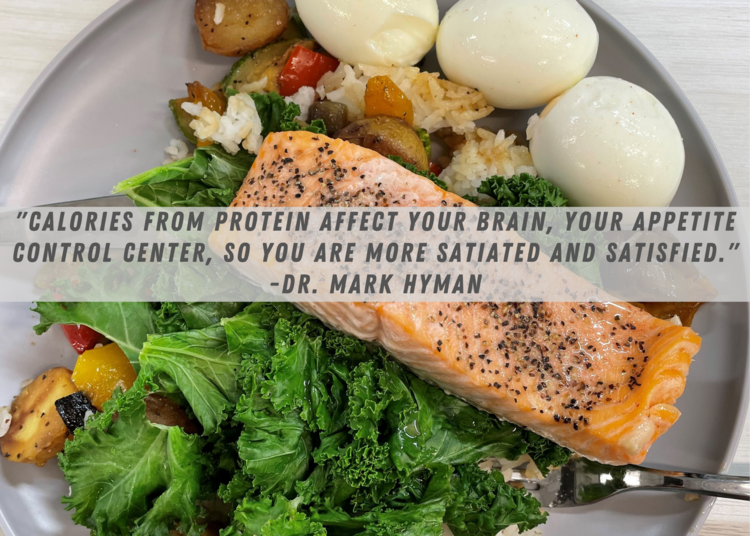
#QUOTEOFTHEMONTH

A message from Founder and Owner, Coach Tristan Mitchell:

Last month I talked about the importance of getting enough protein in our diet – as a reminder we are aiming for as close to 1g of protein per pound of body weight as we can consistently get to. This is particularly important if we are highly active and as we age to support our lean muscle mass, overall strength, and recovery. This month let’s look at various foods and their protein content and start thinking about how we can practically apply this knowledge to the meals we are eating day to day.

We’ll start with some common animal food sources of protein followed by various plant sources. We’ll use the measurement of 100g as it’s comparable to the size of an adult’s palm:

  • Chicken breast – 32g

  • 90% lean, 10% fat ground beef – 20g

  • Various cuts of beef – top sirloin, tenderloin, flank, strip – 27g, skirt – 26g, ribeye – 24g

  • Eggs (per egg) – 6-7g

  • Wild game (various based on animal and cut) – 20-30g

  • Lean pork – 31g

  • Tuna – 30g

  • Salmon – 27g

Plant sources:

  • Hemp seeds – 32g

  • Dry roasted peanuts – 26g

  • Almonds – 21g

  • Tofu – 17g

  • Edamame – 12g

  • Canned lima beans – 4g

  • Black beans – 9g

  • Cooked lentils – 9g

  • Baked potato – 3g

  • Sweet potato – 2g

  • Kale – 3g

These lists can go on forever, but I hope this paints a basic picture of protein content in various foods. A few important things to think about – a good diet has plenty of variety of whole and unprocessed foods, both from animal and plant sources. When we are thinking specifically about protein, animal sources are without a doubt superior. For instance, to get to 32g of protein of hemp seeds you need to eat 550 calories worth (that includes 49g of fat) of hemp seed versus 157 calories (3g of fat) of chicken to get to 32g of protein. It’s a similar number of calories for almonds and peanuts (579 and 567 to be exact).

This doesn’t mean you shouldn’t look at plants as sources of protein, it just means they are not as efficient of a source of protein as animal products – and we’re not even getting into the conversation on bioavailability (I’ll spare you that one for another time!) but in a nutshell protein from animal products is generally thought of has being better absorbed by our bodies. If we are trying to get 1g of protein per pound of body weight you can see how difficult that’s going to be if you’re solely relying on plant sources. Many of the “high” protein plant sources would require you to eat a very large number of calories to get that protein when compared to animal foods. Plant foods provide us with fiber, healthy fats, and micronutrients but not high amounts of protein.

I’ll use myself as an example of how to apply this to meal selection to get to my protein goal, which for me is 175g (I don’t get there everyday but I do try!). I eat two meals a day so if I split that evenly between the meals I need to have at least 3 palm sized servings of protein at every meal, ideally getting a little over 85g of protein.

If I do this primarily through animal foods, I can get there relatively easily by consuming between 400-700 calories depending on my meat source. To do the same via nuts and seeds (high protein plant sources) I would need to consume somewhere between 1200-1600 calories worth of nuts and seeds. Or do get to 85 grams of protein via black beans I would need around 1300 calories worth of black beans or about 10 palm size servings worth. This is all just to get to my protein goals, not including my carbohydrate and fat intake goals! Again, this isn’t to say don’t eat nuts, seeds, or black beans, it’s to say that if you are removing animal foods as your main source of protein it becomes a lot more difficult to reach your protein goals - it can be done but will take proper planning.

Using this visualization of palm sized servings helps me plan my meals better and sets me up to reach my protein goals. Remember, we don’t need perfection, but we do want to be working in the right direction on a consistent basis.

If you have questions or want to discuss how you can best hit your protein goals reach out to us today!


12 Days Of #Fitmas

Starting on Monday December 6th we are going to be inviting you all to participate in a fun Instagram stories challenge, 12 Days of Fitmas! Each day will consist of a fitness, nutrition or life style challenge for the day and all you have to do is share a photo or video of you completing the challenge to your Instagram story by tagging us @lionsdensmp and using the hashtag #strengthmobilityperformance.

You can participate as much or as little as you want, but each time you tag us in your stories showing us that you are doing each daily challenge you'll get entered to win some awesome prizes! This is meant to be a fun, festive challenge to keep us all moving and keep our health in the forefront of our minds during the holidays!

We will post each day's challenge the NIGHT BEFORE so you are prepared ahead of time! Prizes include a box of LMNT of your choice, a Personal Training Session, and a $50 Lululemon Gift Card. Make sure you join us on Instagram for the 12 days of Fitmas!


#LifestyleWithLinds!

Put your hand up if you hate the cold (see photo)! I am personally not a fan of the cold. If I could live somewhere that didn’t get below 80 degrees ever I absolutely would. It’s also usually my biggest hurdle in the winter when it comes to getting my workouts in. If this is you.. keep reading. I have a few tips that have helped me in the past!

  1. Cold Exposure - Yep! Exposing yourself to the cold on a regular basis is one of the best ways to get more comfortable with it. If you hate the cold you might be a hard no on this one, but I have found many benefits of cold showers and ice baths and my personal favorite is the mental toughness you build. I dare you to give it a try!

  2. Prep your food OR plan your meals - “But Lindsey, why is this winter-specific advice?” It’s really not. But from personal experience I tend to eat a lot more unhealthy in the winter and I’m going to assume a lot of people have trouble with that too. If I plan out my meals or prep food then it’s way harder to justify gorging on sweets when I have perfectly good food to eat.

  3. Have a lazy day - Every once in a while, in the winter, just give yourself a lazy day! Lazy doesn’t always make me feel great so I’d probably use this as a “cheat day” or “Netflix marathon day”. Whatever you want to call it, it could be a great way to keep you on track during the week if you have a day like that to look forward to.

  4. Read and listen to health related books & podcasts! Since we spend more time inside in the winter, it’s a great time to read and catch up on podcasts. The reason this is so awesome is because it keeps our minds thinking about health related topics and can encourage us to implement new strategies and lifestyle changes in our own life. If you need extra motivation in the winter, I’d highly recommend doing this. My favorite nutrition book is Eat the Yolks and my favorite health related podcast is Health Theory with Tom Bilyeu.

If you need help staying on track this winter, the trainers at Lions Den (as you know) are top notch! You should also absolutely reach out to Tristan if you want to learn more about cold exposure and/or nutrition.


#MOBILITY

Improving Internal Hip Rotation by: Coach Joel

One of the most important movement principals we teach at Lions Den is torsion. Torsion is expressed by producing rotational tension in your hips and shoulders with the purpose to create safe and stable positions for those joints and to help preserve a braced neutral spine. Internal rotational capacity of your hip is crucial for creating stability when your leg extends behind you. It also plays a role in generating force in your extended leg when you’re lunging or running. Lacking the ability to express internal rotation of the hip capsule causes inadequate stability at end ranges, loss of maximal force generation from your hip engines, and limited capacities at both flexed and extended hip positions. The following mobilization is an effective way to restore and improve all of these capacities.

Lying Internal Hip Rotation Mobilizations
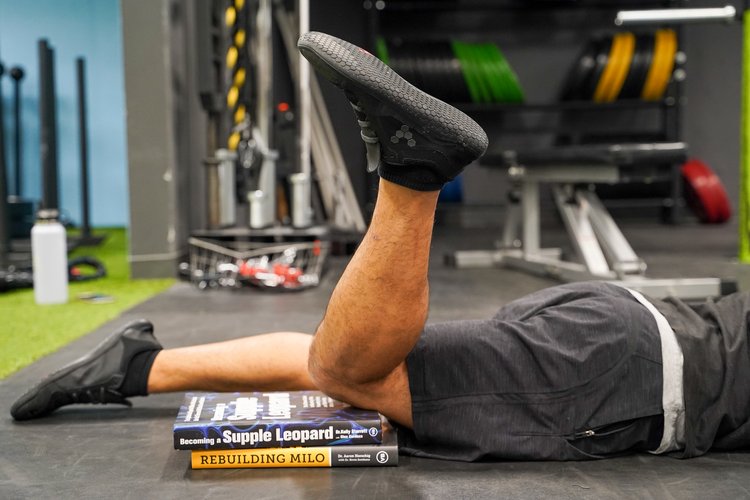
Step 1: Lie flat on your stomach then bend one knee to a 90 degree angle
Step 2: Keeping your hips glued to the ground let your foot fall outwards
Step 3: Inhale and continue to actively rotate your leg so that your foot moves closer to the ground until you find your end range and hold your breath.
Step 4:Then relax and let gravity and your exhale bring your foot closer to the ground. Repeat steps 3 & 4.

Ways to improve this mobilization:

1.) Knee on a book

2.) Banded assistance

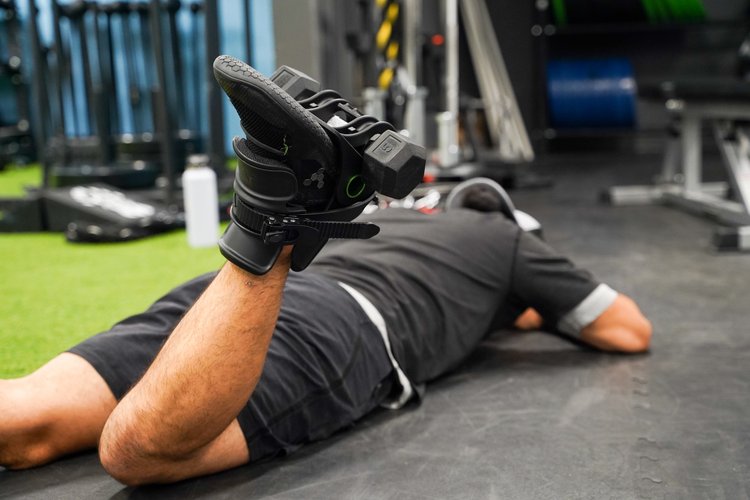
3.) Weighted

Both the banded assistance and weighted versions will add the ability to actively fight against the resistance in step 2, which greatly improves the effectiveness of this mobilization. Test the effectiveness of this with a couple squats, split squats and/or the position in step 2.

Internal rotational capacity is critical for proper hip function. It plays a role in both stability and torsion. If you lack the ability to express internal rotation of this capsule the hip is weaker and less stable than it could be. Restoring and improving hip function feels SO Nice! Get stronger, increase stability and feel looser by incorporating this mobilization into your maintenance routine. If you have questions, other mobility issues or would like to dive deeper into creating a more supple body, please feel free to reach out to schedule a personalized private 30 minute session with your friendly neighborhood mobility nerd. Stay Mobile My Friends!


#PODCAST OF THE MONTH

Huberman Lab: Using Your Nervous System to Enhance Your Immune System | Episode 44

This episode teaches you a lot about the immune system, immune-brain interactions and offers 12 potential tools for enhancing immune system function. Andrew Huberman discusses how our immune system works and science-supported tools we can use to enhance our immune system.

Andrew discusses the innate and adaptive immune systems and our various microbiomes-- not just in our gut but also in our nose, eyes and mouth and how to keep them healthy. And he reviews how specific patterns of breathing and foods maintain a healthy mucosal barrier that is crucial for fighting infections. He discusses how certain neurochemicals called catecholamines enhance our immune system function and how to use specific breathing protocols, types and timing of heat and cold exposure, and, if appropriate, supplementation to activate catecholamines. Andrew also discusses the role and use of serotonin for the sake of accessing the specific types of sleep for recovering from illness, and how to increase glymphatic "washout" of brain debris during sleep. He also reviews fever, the vagus nerve and the use of atypical yet highly effective compounds for rhinitis (nasal inflammation).

 
facebook instagram

Lions Den SMP, 5058 S. Syracuse St., Denver, CO 80237, USA

Unsubscribe