|
A message from Founder and Owner, Coach Tristan Mitchell: Mental toughness. It’s a topic I often think about. When it’s worked on and cultivated, it can be massively beneficial for our lives and there are few better places to hone this aspect of your life than the gym. As we’ve talked about in the past, consistency is the name of the game when it come to health, fitness, and performance. Consistency is one of the greatest examples of developing and displaying mental toughness. Every single one of us - every novice to workout junkie to professional athlete in the world - experiences days where they must utilize mental toughness to show up for their workout on a day when they simply don’t feel like it. Consistency is mental toughness, don’t let easy excuses win the day. Now I am not saying don’t listen to your body and train even when you’re exhausted or when you’re injured, but I am saying learn to know the difference between that and just feeling unmotivated. There will be aches and pains, you will be tired, you will be busy, it will be too cold out or too hot, you will always be able to find an excuse. Develop the mental toughness to triumph over the excuses every single day.
|
|
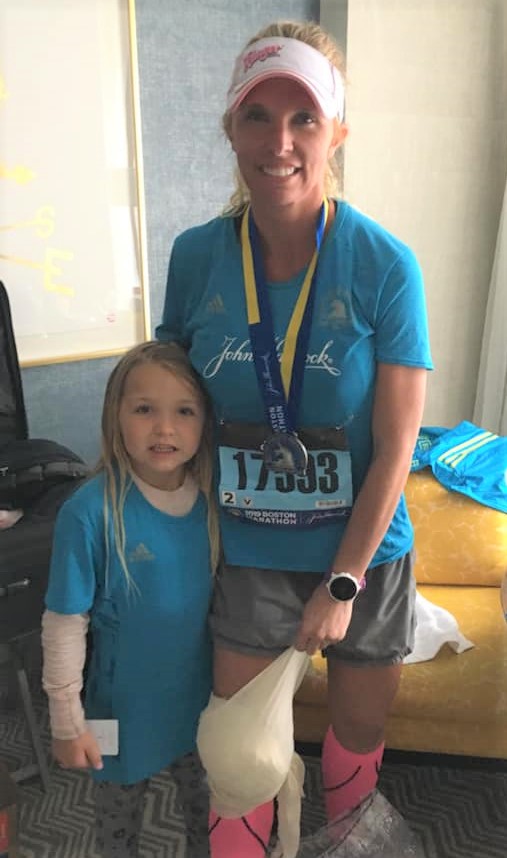
Congratulations to Kelli Maxwell for running the Boston Marathon on April 15th! Kelli does her strength training here at Lions Den. Strength training is essential for runners for injury prevention, performance and just overall toughness. It increases the ability of your bones, ligaments, tendons, and muscles to withstand the high impact of running. As anyone who has ever run a marathon can tell you, there are a lot of ups and downs out on the course and Kelli had to fight through a tough second half of the race. |
Congratulations to Kelli Maxwell for running the Boston Marathon on April 15th! Kelli does her strength training here at Lions Den. Strength training is essential for runners for injury prevention, performance and just overall toughness. It increases the ability of your bones, ligaments, tendons, and muscles to withstand the high impact of running. As anyone who has ever run a marathon can tell you, there are a lot of ups and downs out on the course and Kelli had to fight through a tough second half of the race. |
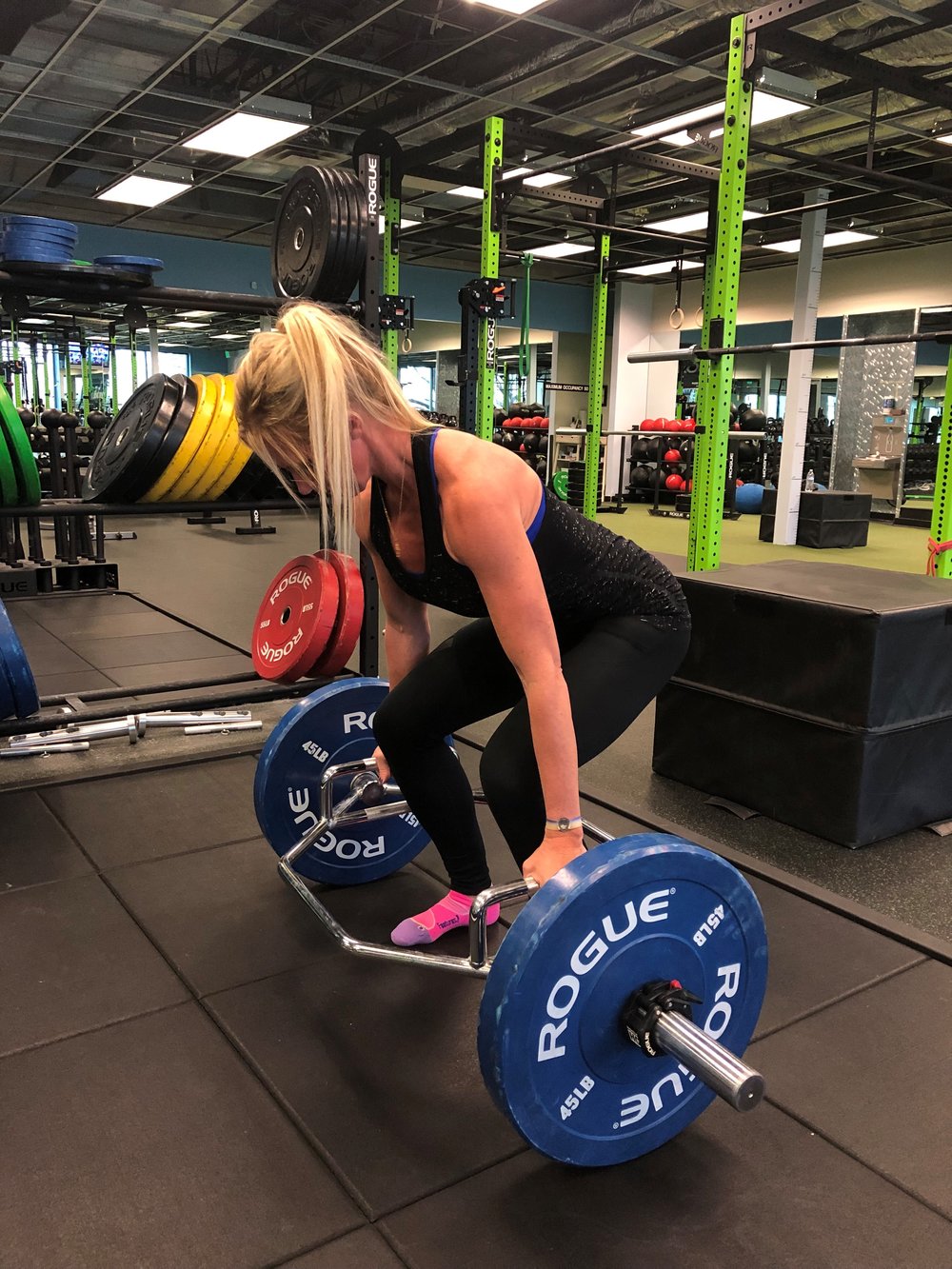
The medical personnel at the race noticed that Kelli was looking light headed and they pulled her into a medical tent. They wanted her to stop, and told her she should DNF. Kelli had other plans though. She got hydrated and told the medical staff she was good to go. She hopped up and got back out on the course. From there it was sheer determination and grit that got her to finish line. Even with the medical stop Kelli still ran a great time of 3:50:36 – way to go, Kelli! |
|
The medical personnel at the race noticed that Kelli was looking light headed and they pulled her into a medical tent. They wanted her to stop, and told her she should DNF. Kelli had other plans though. She got hydrated and told the medical staff she was good to go. She hopped up and got back out on the course. From there it was sheer determination and grit that got her to finish line. Even with the medical stop Kelli still ran a great time of 3:50:36 – way to go, Kelli! |
The Pressure Wave by Coach Joel Freiboth:This month we continue covering the principles of mobility and start to dive deeper into specific methods and techniques. There is a dynamic relationship between mobility systems and methods. Utilizing combinations of different methods and techniques can help to create the greatest amount of the change. The mobilization techniques we will cover here and in upcoming newsletters are: the pressure wave, contract and relax, banded flossing, smash and floss, tack and twist, voodoo flossing, compression and flexion gapping, safe self-administered joint manipulations, and scraping. The Pressure Wave This technique is a way to work through deeper layers of connective tissue and muscle. In order to better illustrate this concept, imagine a cargo ship traveling through a frozen arctic sea breaking up any ice in its path. Now liken the ice to be your stiff skin, muscles and connective tissue and the cargo ship representing a foam roller or ball slowly pushing through and breaking up knotted tissue. These knots are also referred to as trigger points which not only cause pain at the site, but can cause pain up and downstream, restricting ranges of motion. Using the pressure wave technique to work through a knot becomes a great way to relax a muscle and restore it to normal function. This technique is best for creating neurological stimulation, restoring sliding surface function, treating sore and/or tight muscles, releasing trigger points and knotted muscles, and improving muscle contraction. Best times to do this: Very briefly pre-exercise, ONLY to activate neurological stimulation During mobilization sessions to improve and restore sliding surface function Post exercise, at night after a shower or before bedtime, anytime you want to down-regulate your nervous system
One of my favorite uses of this technique is on the quads or the front side of your upper legs to release and relax stiffness and soreness post workout. I attack each leg separately and prefer a knobby foam roller, but any foam roller or ball will work. The larger the mobility tool used the greater the surface area affected and vice versa with a smaller tool. If you have a bunch of tight tissue, which usually is the case with the quads, utilizing a foam roller address the tissue more globally. If you have a specific trigger point, then a smaller ball better localizes the pressure.
|

|
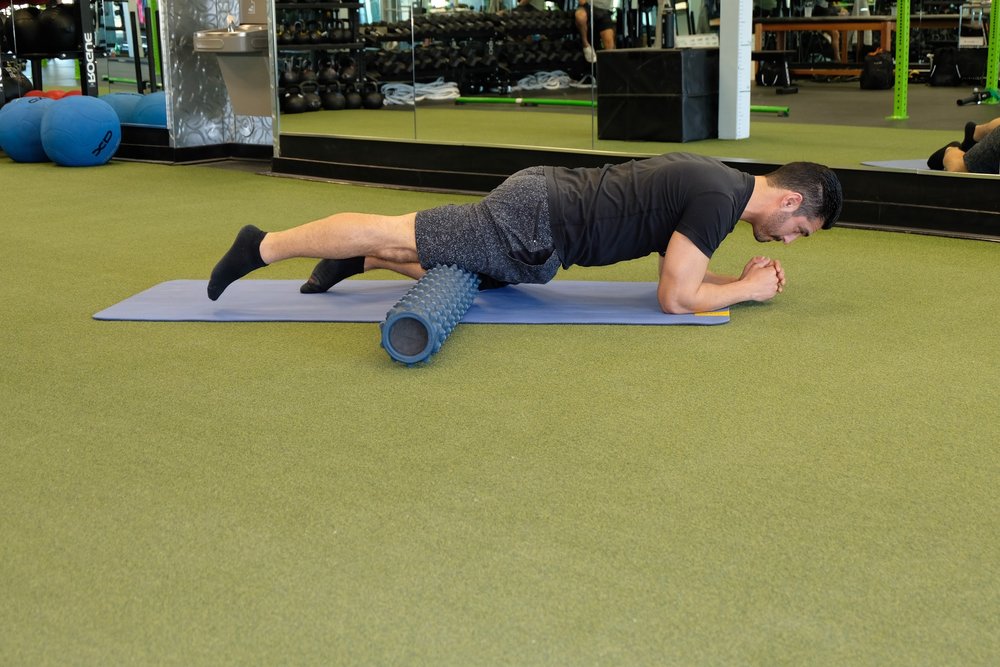
Lie on the foam roller, starting at the top of the quad. The goal is to get into deeper layers of tissue which requires a relaxed muscle. To accomplish this you need to use big breaths in and slow controlled breaths out to allow your nervous system to relax. Next slowly roll over your target area using the full weight of your body. |
Lie on the foam roller, starting at the top of the quad. The goal is to get into deeper layers of tissue which requires a relaxed muscle. To accomplish this you need to use big breaths in and slow controlled breaths out to allow your nervous system to relax. Next slowly roll over your target area using the full weight of your body. |
The slower you move the more pressure you should be able to handle and the more relaxed your body will be allowing for more positive outcomes. Moving too fast keeps your muscles engaged as you roll which defeats the purpose of this specific technique. Remember your spinal position is a priority when utilizing any method and modality during mobilizations. |
|
The slower you move the more pressure you should be able to handle and the more relaxed your body will be allowing for more positive outcomes. Moving too fast keeps your muscles engaged as you roll which defeats the purpose of this specific technique. Remember your spinal position is a priority when utilizing any method and modality during mobilizations. |
|
This area is often tender under the compression of a foam roller especially if you don’t mobilize your quads often. If it is, then your body is begging for a daily maintenance routine. It is easy to spend ten minutes per leg utilizing a combination of techniques, yet for now just spend a couple of minutes on each or even better count to twenty fully controlled breaths in and out per leg. Foam rolling the quads is an area we frequently address during our mobility class sessions so join us, your quads will love you for it afterwards! Or, you can schedule a half-hour private with one of the “Mobility Nerds” or Coach Joel himself to get a more personalized session for your particular tissue ailments. We would love to chat with you about your favorites techniques and give you a checkup to make sure you are moving right.
|
Resilience: The Capacity to Recover Quickly From Difficulties; Toughness by Coach Wade Bass
|
|
Why do I train? Because there is no better feeling than asking your body to complete a task and it responding, “Hell ya! Let’s do this!” Training has not only increased my confidence but it has increased my durability aka toughness. I recently got back from a mountain biking trip in Moab, a place that is unforgiving to errors. On this trip, I took a classic over the handle bars fall landing on a boulder completely bending the crank of the bike and wheel, something that is very hard to do. I admittedly got lucky to the outcome, but I also feel that consistent weight training has increased my bone density, muscle mass, and mobility. All factors that helped minimize injury on this fall. The reason I bring this up is because it is part of my WHY. It is what keeps me showing up everyday and participating in the suffer-fest of the gym. Mental and physical toughness allows for the opportunity to conquer each day to the best of my ability! I strive to be resilient to what life throws my way, the gym is my training grounds.
|
Meal of the Month: Raw Protein BarsIf you've scoped out the Zeal cooler at Lions Den, you might have noticed these little beauties on the shelf. Well folks, that's the only place (right now) you can get ‘em! Why we chose it Made lovingly by Wayde himself, these protein bars are a LDSMP exclusive! Packed full of healthy carbs, fats and protein, these bars are the perfect post-workout refueling snack. They'll fill you up, give your muscles some energy for recovery, and they taste amazing! What it is Ingredients: 250 g rolled oats 4 rice cakes 100 g vanilla protein powder (of your choice) 1/2 tsp salt 240 g peanut butter 250 g maple syrup 1 T baker's extract 1 T chia seeds, soaked for 3 minutes in 1/3 cup warm water Optional: 1/4 cup semi-sweet or dark chocolate pieces + 1 T coconut oil for chocolate drizzle
Materials Needed: How you can get it Grab some in the Zeal cooler after your workout or here's how you can make them at home: Instructions: In a food processor or high powered blender, grind the rolled oats into a flour-like consistency. Add the 4 rice cakes, crumbling to make them fit. Process all for about a minute, then add protein powder, and salt. Pulse a few times to evenly blend. Place the dry ingredients in a mixing bowl. Then add peanut butter, maple syrup, bakers extract, and the chia seed/water mixture. Blend until the mixture is fully combined. Then, scrape and press into a 9 x 11 inch pan using the palm of your hand or flat bottomed pan. Place in the freezer for about 15 minutes. Cut and serve! *Optional: if making the chocolate drizzle: In a small pot on the stove-top combine chocolate chips and coconut oil. On low heat, whisk together continuously until melted. Pour over the pan containing your evenly pressed bars. Return to the freezer for about 5 minutes while you clean up, then remove and cut into individual bars.
|

|
Set your intention and get up and get active in the morning with this primal style inspired movement class where we explore a full body weight workout including animal flow sequencing crossed with the yoga basics. In this movement class we will get the heart going and blood flowing while we move around on our mats mindfully establishing body awareness, self control and overall body strength and balance through breath and action. Lions Den SMP Members can take this Yoga Flow Class with Movement & Mobility Specialist and Registered Yoga Teacher Zachary Horan for just $20 or purchase a 10-pack for $150. For non-members this class is $25 and $200 for the 10-pack. |
Jason Fitzgerald’s The Strength Running Podcast - Episode 72: Mark Cucuzzella, MD on A Comprehensive Injury Prevention Plan
|

|
If you don't know Dr. Mark Cucuzzella, you're missing out. He is a professor at West Virginia University School of Medicine and a Lieutenant Colonel in the US Air Force Reservists. He designed the US Air Force Efficient Running Project and has presented running workshops on over 50 military bases. Mark has been a national-level Masters runner, completed more than 100 marathon and ultra-marathon races, and is a two time winner of the Air Force Marathon. His PR? A staggering 2:24. |
If you don't know Dr. Mark Cucuzzella, you're missing out. He is a professor at West Virginia University School of Medicine and a Lieutenant Colonel in the US Air Force Reservists. He designed the US Air Force Efficient Running Project and has presented running workshops on over 50 military bases. Mark has been a national-level Masters runner, completed more than 100 marathon and ultra-marathon races, and is a two time winner of the Air Force Marathon. His PR? A staggering 2:24. |
|
Mark's new book, Run for Your Life: How to Run, Walk, and Move Without Pain or Injury and Achieve a Sense of Well-Being and Joy is all of his expertise and experience distilled into one manual for preventing injury. Mark goes on the Strength Running Podcast to discuss these topics in more detail. They focus on three main areas of prevention: Running form: cues, mistakes, and big picture principles Barefoot running: how to get started and avoid injuries Lifestyle: what factors predispose you to getting hurt?
Make sure you give this podcast a listen and learn more about running pain free!
|
THE FOOT COLLECTIVE WORKSHOP
|

|
Lions Den SMP will be hosting a workshop with TFC on June 22, 2019. You don’t want to miss this! In this workshop you will learn about: When: Saturday June 22, 2019, 2 - 4 pm
Cost: $90 CAD (Approx $75 USD). |
Lions Den SMP will be hosting a workshop with TFC on June 22, 2019. You don’t want to miss this! In this workshop you will learn about: When: Saturday June 22, 2019, 2 - 4 pm
Cost: $90 CAD (Approx $75 USD). |
|
Sign up here! If you are a Lions Den Member you will receive a 15% discount, email us for the discount code!
|
|
|
|
|