$$PLAIN_TEXT_PREVIEW$$

THE PRIDE

LIONS DEN SMP MONTHLY NEWSLETTER

NOVEMBER 2022 | ISSUE 48


#QUOTEOFTHEMONTH

A message from Founder and Owner, Coach Tristan Mitchell:

This month we’re talking protein, one of my favorite topics of conversation – more specifically we’re going to talk protein and it’s importance to our muscles. This month’s linked podcast interviews Don Laymen PhD, who coined a term that I love, “muscle centric health” – essentially the healthier we can maintain our muscle the better for our overall health. There are two major focuses for our long-term health, according to Don, our brain and our muscle. If those two are taken care of the there’s a very good chance of a long and healthy life.

Muscle is the most important tissue in our body to maintaining metabolic health, it deeply impacts our glucose and lipid levels because muscle is one of the primarily locations where these energy sources are being utilized. If our muscle is not healthy, our metabolic health suffers, and as we discussed a couple of months ago if our metabolic health is poor then our overall mortality risk factors increase. Another big and obvious factor to how much glucose and lipids we have in our bloodstream at any one time is how many of them we are eating at a meal, for example – chronic over consumption of carbohydrates creates an environment of chronic excess insulin, too much insulin too often is our path to diabetes. However, healthy, and active muscles are one of the best ways we can make sure that whatever excess energy might be present has somewhere to go.

Our bodies are very good at storing fat, if we have eaten excess fat that our body isn’t utilizing for energy then we store it. If we eat excess carbohydrate our body converts that to fat, specifically saturated fat, and stores it as well. So, part of this conversation about metabolic health is simply energy balance but that’s not where our focus is today, or focus is on maximizing muscle health to provide a place for our energy intake to go.

Clearly exercise is a massive part of this equation and healthy muscle is forged in the fire of exertion, we need resistance training to build and maintain healthy muscle tissue. For our muscle tissue to grow in response to training we need adequate protein. Not just the bare minimum either, we need enough protein to go through muscle protein synthesis - a process that allows us to grow and maintain muscle mass.

The RDA (recommended dietary allowance) of protein is 50 grams of protein per day but this number is woefully inadequate to thrive and create, or even adequately maintain, muscle mass as we age. Don Laymen says that we should be aiming for a minimum of 125 total grams for men and 100 grams for women with the goal being to get as close to 1 gram of protein per pound of body weight as possible.

Total grams aren’t the only important aspect of our protein strategy, we also need to consider how much protein we are eating per meal. This is because we need enough protein at any one time to signal to our body that there is enough protein available to prioritize the expensive metabolic process that it muscle protein synthesis. That means that spreading out our protein into small amounts throughout the day is not ideal, instead we want to target 30-60g per meal, that 30g minimum is sufficient to support our organ health (which our body prioritizes first) and muscle maintenance. If muscle growth is the goal, then we want bump that number up. There’s debate around how much protein can be adequately used at one time but 60g seems to be the upper limit for most people although there will be individual variability.

The final aspect that we want to take into consideration is protein timing, our prioritization here is first meal and last meal of the day – we want to kick on muscle protein synthesis first thing after we break the overnight fast and before we go to bed and into our overnight fast. It is not paramount that our “fast” breaking meal (breakfast) happen first thing in the morning, it can occur whenever, just prioritize that high protein meal (30g +) whenever you eat breakfast.

If 100-125g or more seems like it’s too much protein, consider this - our body turns over 300g of protein every day, working on maintenance of every tissue in our body. Now this doesn’t mean we need 300g of protein a day because our bodies are good at recycling amino acids but as we age we get less efficient and our response to dietary protein deteriorates. This means we require more protein in our diet, specifically more protein per meal (30-60g!), to elicit the response in the muscle that we want.

Be bullish on your protein intake and reap the rewards of better muscle health! If you have questions on how to improve your protein strategy reach out to us today!


#MOBILITY

Movement Snacks by: Coach Joel

What’s up Lions?

This time of year is one of my personal favorites. The changing of the leaves signals Halloween, Thanksgiving, followed by the Holiday seasons and that means a lot of fun time with family and friends. Unfortunately it usually comes with some questionable snack options with candy bowls everywhere we go. Let's look away from those and towards some other snack options much more suitable for our physical health. Enter Movement Snacks.

These are snacks that we give our body during the day to combat the harshness of extended periods of being idle. There are numerous work studies arriving at similar conclusions as to how frequent movement breaks have several positive implications:

  1. Quick mental breaks have shown to improve memory, which is great for study sessions.

  2. Eye-breaks give relief from overstrained eyes.

  3. Scheduled breaks can lead to better time management. which could also result in better productivity.

  4. Movement breaks refresh joints and soft tissue.

The key to success is actually remembering to take a movement snack break. There are lots of tricks to assist in this realm, which include activity tracking apps, utilizing wearables such as watches, monitors and bands or old fashioned alarms/timers on your phone and/or PC/laptop. Breaks should be taken every 30 minutes for the greatest benefits on our health. The following are just a few of my favorite movement snacks.

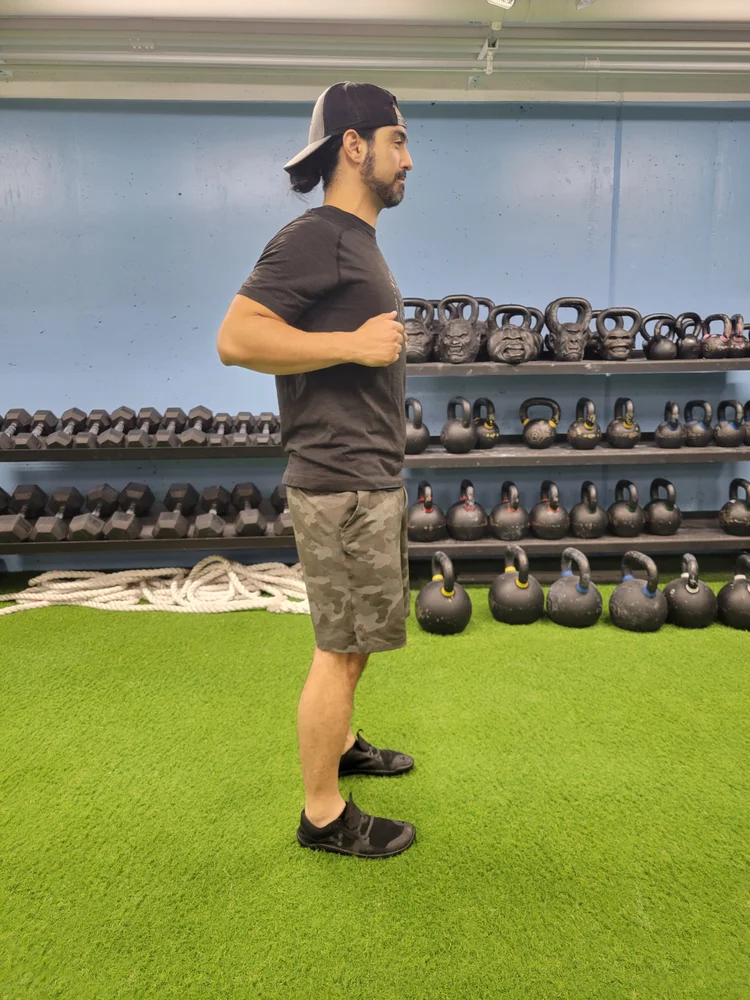
Gunslingers

Start by standing, stretch and reach your hands out in front of you rounding your upper back, then pull your elbows as far behind your back as you comfortably can, pulling your upper back into extension. The focus here is to get your shoulder blades moving again. Repeat the two movements for at least 10 reps.

Gunslinger, rounding the upper back

Pulling the elbow back, pulling into extension

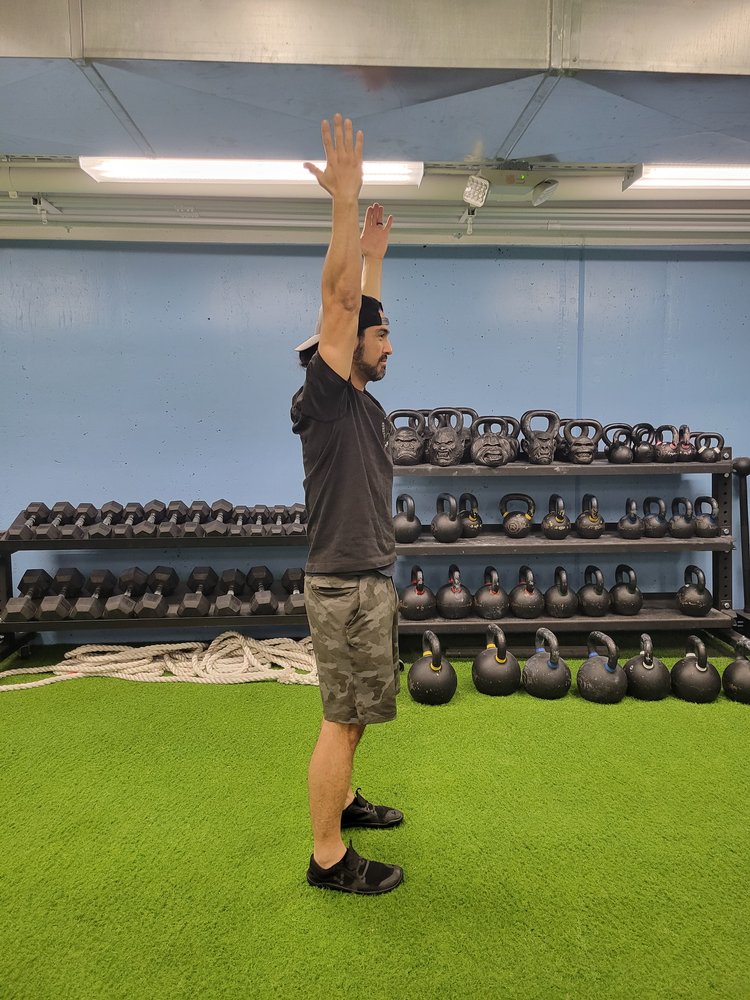
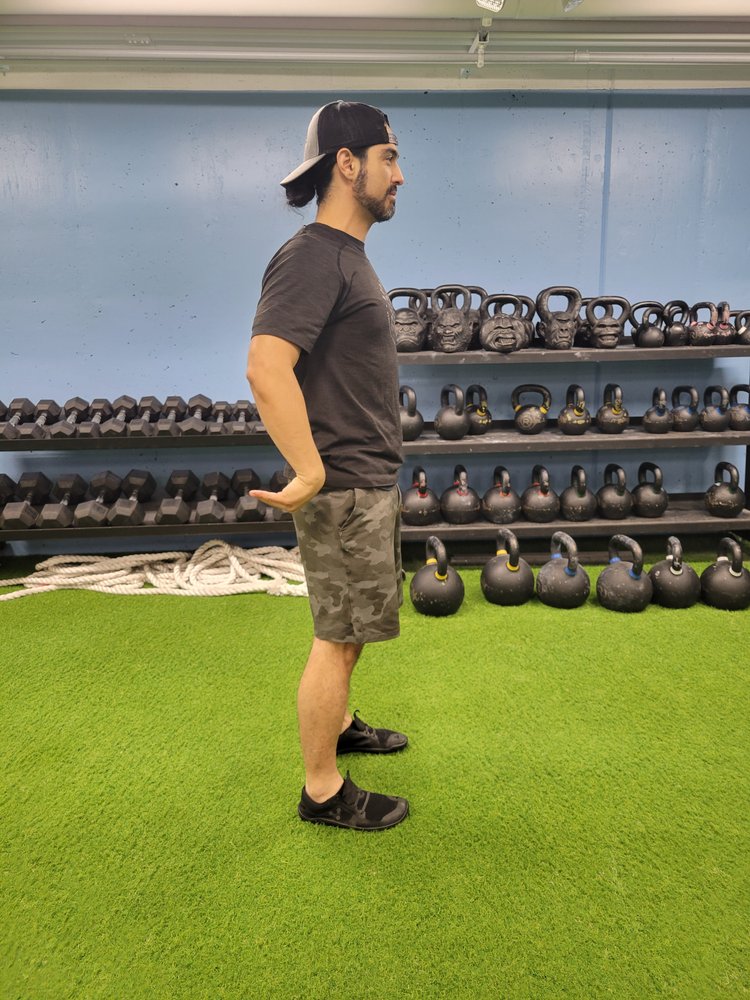
Field Goals to Flick-backs

Start by standing, reach up above your head, then bring your arms down by your sides and flick your fingers backwards continuing the full range movement patterns. Repeat for at least 10 reps.

Overhead

Flick-back

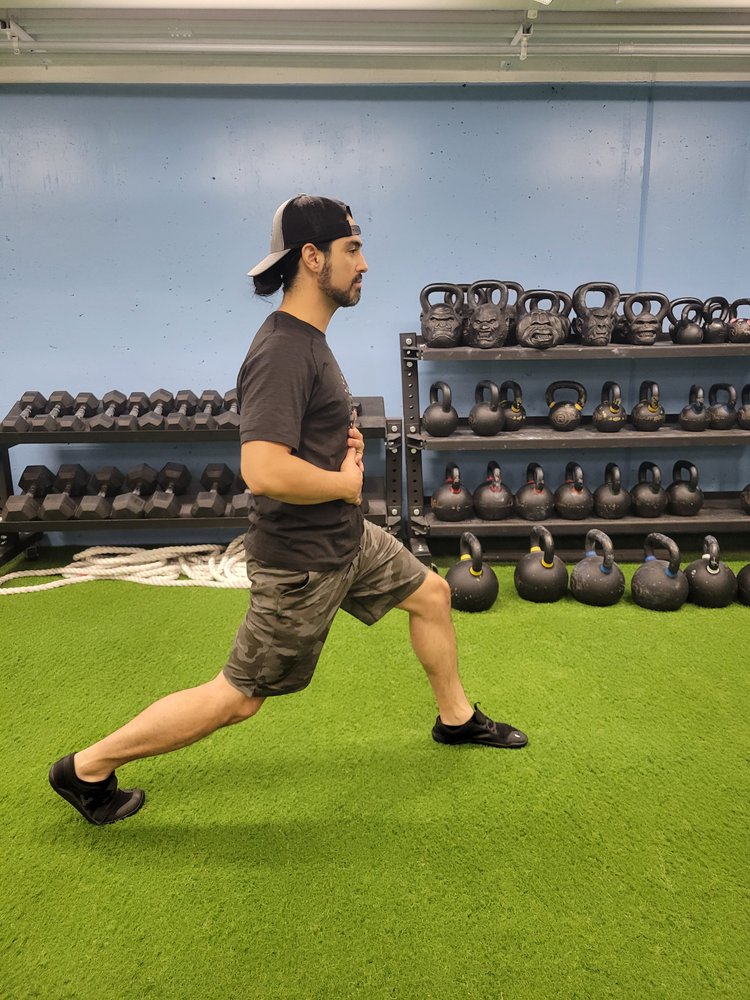
Split Squats

Start standing, kick one leg back, engage that glute and gently drop that knee straight down towards the ground stretching out your back hip. Focus on keeping your trailing leg glute engaged, front shin as vertical as possible, and your torso upright and neutral. Repeat 10 times per leg.

Long Split Stance

Lunge

These are just a few of my favorites because they get you standing, shoulder blades moving, plus expose your shoulder and hips to their greatest ranges of motion. These are simple concepts to follow as a template for any movement snack. We encourage you to develop your own routines that are specific to your personal needs and that are appropriate for your work environment. If you’re in front of a computer for extended periods and have access to a window, then use the opportunity to look far into the distance to give your eyes a rest as well as strengthen them during your movement snacks.

This season incorporate these healthy habits by taking planned breaks during work sessions. Instead of grabbing for that leftover candy from Halloween, opt for a movement snack instead. If you need any additional help and would like to take a deep dive into ways to improve your strength, mobility and performance, please feel free to reach out. I’d love to help out any way I can to get you feeling great everyday. Stay Mobile My Friends!


#PODCAST OF THE MONTH

The Petter Attia Drive | #224 Dietary protein: amount needed, ideal timing, quality, and more | Don Layman, Ph.D.

Don Layman is a Professor of Food Science and Human Nutrition at the University of Illinois Urbana-Champaign. He has spent the past 40 years investigating the role of dietary protein in muscle protein synthesis. In this episode, Don describes how his decades of research have shaped his thinking around protein, muscle, anabolic factors, metabolism, and more. He explains the recommended dietary allowance (RDA) for protein: what it is, how it came about, and how it should serve only as a guide for the minimum protein necessary for survival rather than as an optimal level of protein intake. He provides an overview of the essential amino acids, explains the nuances of animal versus plant protein, and provides insights for determining protein quality, absorption rates, and how to best track your intake. He discusses the ideal timing of protein intake in relation to resistance exercise, how protein should be distributed among meals, and how limitations in protein utilization per sitting can impact those practicing time-restricted eating. Additionally, Don shares results from his clinical trials, including how a high-protein diet fared in terms of fat loss, and explains the differences in protein utilization between adolescents and adults and how the problem of reduced efficiency of protein utilization in older adults can be overcome.

 
Lions Den SMP
facebook instagram

Lions Den SMP, 5058 S. Syracuse St., Denver, CO 80237, USA

Unsubscribe