|
$$PLAIN_TEXT_PREVIEW$$
|
SEPTEMBER 2022 | ISSUE 46
|
|
|
A message from Founder and Owner, Coach Tristan Mitchell: For the second year in a row America has seen a decline in life expectancy. There are undoubtedly a lot of factors at play here but one thing that likely won’t get a lot of conversation is the obvious influence we have over this decline. We are in control of the most powerful lever we can pull when it comes to our health and longevity, and that lever is exercise. I think basically everyone knows that exercise is beneficial to our health but the extent to which it is, is easy to underestimate. We’ve linked up a great podcast below that will take a deep dive into why exercise should be a top priority for everyone. We’re going to touch on a few of the items that are discussed here: Exercise has a multitude of benefits that seem to stack on top of each other to amplify it’s overall benefit – the most impactful from a longevity standpoint are improvement in blood pressure, blood sugar regulation, stress management, endothelial function, maintaining musculoskeletal strength, autonomic nervous system, and to a lesser extend - lipid and cholesterol profiles. Consistent exercise can reduce cardiovascular disease (the leading killer in America) and all cause mortality by 50%. Meaning your risk at any stage of your life of heart disease is decreased by 50% when compared to non-exercising peers. There have been numerous natural experiments (two groups of people who are otherwise similar exposed to different things) that have shown the benefits of exercise. A study conducted in England after WWII looked at active bus conductors vs sedentary drivers. This study kicked off a wide range of follow up studies to look at the benefits of exercise because its results were so compelling – a 50% reduction in cardiovascular disease. Further natural experiments have shown very similar results, in both heart disease and all cause mortality. Regular exercise also has shown to increase lifespan between 3-5 years on average and health span (quality of life) between 6-8 years. We are meant to move – a study performed by NASA in the 60’s took 5 college age individuals and put them on bedrest for 3 weeks – over those 3 weeks they saw a loss in physiological function associated with 30 years of aging. We need daily movement, even modest increases in movement, more daily steps, gardening, etc have massive health benefits. Training (exercise being a part of your everyday life) is the most important thing you can do to slow age related decline. It is never too late to start regular training but the earlier in life, the better. Research shows that 70% of 70-year-old people cannot get off the ground – period, not with one hand or two. There seems to be a cliff in our 70s where musculoskeletal frailty becomes a serious problem, falling can be death sentence. Strength and stability training (again, starting earlier the better) is vital to mitigating this risk. The goal should be to get as strong and fit as possible at a young age and then work to maintain that to best of our ability as we age. When looking at the impact of exercise and nutrition on mortality – the fitter someone is the less of an impact nutrition played in mortality. Studies have shown that exercise when coupled with low level activity (walking, gardening, daily movement, etc) is such a powerful longevity tool that if done enough it can essentially overcome a bad diet when it comes to mortality. That being said, exercise is much easier when you’re giving your body quality fuel! Training to elevate your VO2 max to as high as possible as early in your life as possible has big benefits later in life. The higher your baseline VO2 max the better you can buffer age related decline in VO2 max – which plays a important role in workload ability as we get into our later decades. We’ll come back to VO2 max as a topic next month! The most important aspects of a longevity focused training plan looks a lot like a training plan for performance, just less time commitment/volume. This includes: strength/stability/agility training – think weight, balance, movement and coordination training, aerobic training - lower level, sustainable cardiovascular training that builds aerobic efficiency and mitochondrial health, and interval training – shorter, harder intervals to boost VO2 max. It is important to know that some people need to train to train – if you are very deconditioned then there needs to be a serious “base building” stage of training before you attempt to get into higher intensity training. This is not only smart training, but it also decreases the likelihood of early injury or burnout.
This is a quick “cliff notes” version of some of the discussed topics in this month’s podcast, take a listen when you get a chance! If you are interested in fine tuning your current training routine or are looking to get your training routine re-started or started for the first time reach out to us today – we are here to help! |
|
#MASSAGE with Physio Room is back!
|
|
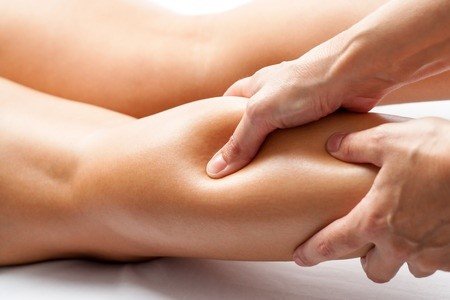
Physio Room is excited to announce that massage therapy is back at Lions Den! Starting on 9/6/22 Physio Room will be offering massage therapy appointments on Tuesdays and Thursdays (more details to come on even greater availability).
Please contact the office at 720-316-9974 or visit Physio Room to schedule your session today!
|
Morning Mobility Series - Lunge Flow by: Coach Joel
|
|
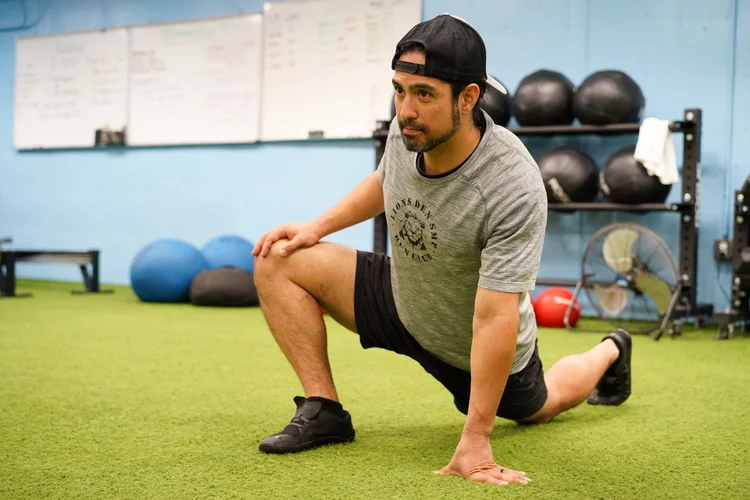
What’s up Lions!? Have you ever woken up with tight hips and a stiff back? It’s extremely common no matter your age, especially considering the many types of physical demands that could have been put on your body from activity and exercise. Some other possible causes can come from dehydration or prolonged periods of inactivity like standing, and sitting. Sleeping positions can also contribute to waking up tight and stiff. There are multiple ways to improve this, all of which center around movement. They include a morning movement routine, daily movement snacks, formal movement practice and a bedtime maintenance routine. The following mobilizations will address stiffness in your back and hips. It’s a great option for your morning movement routine. This routine begins from the lunge position focusing on both hips, shoulders and thoracic spine then switching sides to repeat the flow.
|
|
Front Hip Openers With your front foot glued to the ground drive that knee outwards to the side 5-10 times. Stay in this same lunge and switch focus on the next portion. |
|
|
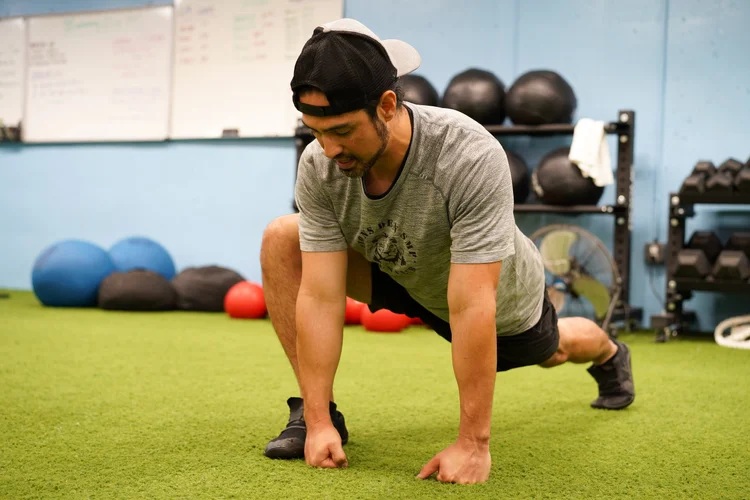
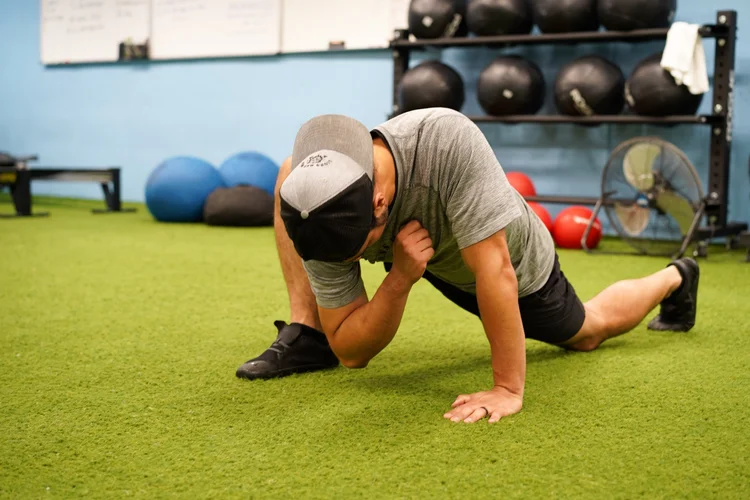
Hip Floss Activate your glutes, straighten your trailing leg and bring that knee off the ground. Drop your rear knee and drive that hip towards the ground 5-10 times. |
|
|
|
|
Elbow Reach Maintaining slight core activation, reach your inside elbow towards the ground or opposite wrist as far as possible then gently lighten up and repeat reaching your elbow 5-10 times. |
|
|
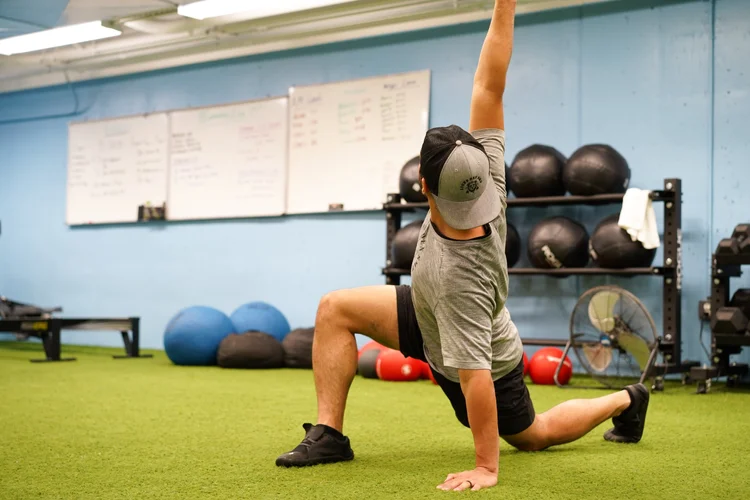
Overhead Reach With the same inside arm, reach up towards the ceiling. Keeping your arm straight and raised, rotate your torso as far as possible, ease off and repeat 5-10 times. |
|
|
|
|
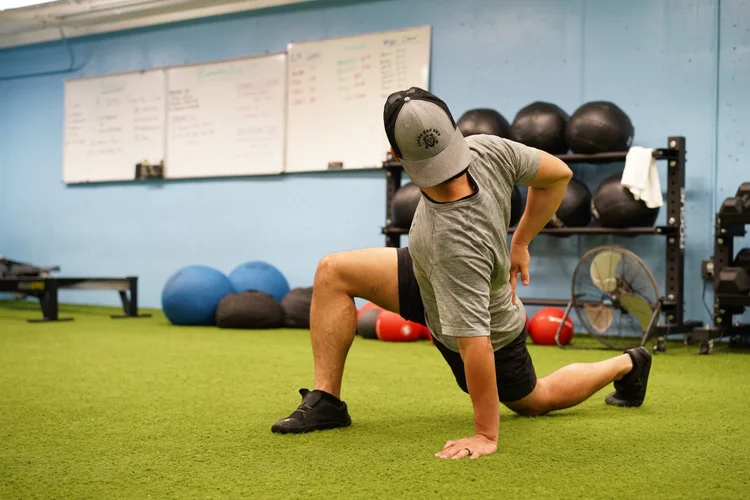
Behind the Back Reach Next, keeping focus on your raised arm, bring it down and behind placing the backside of your hand as far up your back as possible. From here searching for some slight torso rotation. Relax and repeat 5-10 times. |
|
|
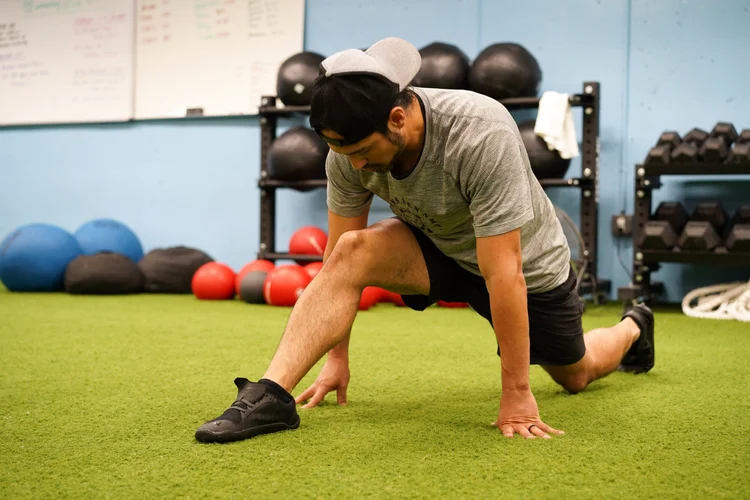
Hammy Floss Keeping your back knee on the ground, reverting focus on the front leg, straighten it and squeeze your quad to help lengthen the hamstring and protect the knee. |
|

|
|
|
Contract and relax 5-10 times before switching to the next portion. |
|
|
|
Downward Dog to switch sides Lastly, step your front leg back into a plank position and drive your hips towards the ceiling to sneak a downward dog in before you step your other leg forward to begin the process on the opposite side. Perfection is not necessary here. The idea of the lunge flow is to safely expose your joints and tissue to end range positions in a short amount of time. This can be done by itself or in combination with other movement exercises as a part of your morning movement routine. This flow can be done quickly in as little as one round or longer with added repetitions in each stage or more rounds of the entire flow. Its versatility allows it to be used before workouts and activities and is a great full-body movement flow. Mobilizations like these will help nurture a healthy body. Keeping it quick and simple encourages consistent habits. Consistency is the key to efficacy and waking up feeling supple. Morning movement is a successful part of that equation. Give this a bit of time, do this daily and just see how much better your hips and back feel. Please feel free to reach out with any questions or needs you have with improving your personal mobility. I’d love to help out any way I can to get you feeling great everyday. Stay Mobile My Friends!
|
The Peter Attia Drive | Episode #217 Exercise, VO2 max, and longevity with Mike Joyner, M.D.
|
|
Mike Joyner is a physician-researcher and one of the world’s leading experts on human performance and exercise physiology. In this episode, Mike discusses how to combat age-related declines in health and fitness levels by using various modes of exercise to improve lifespan and healthspan. Mike explains the impact of exercise on the autonomic nervous system, blood pressure, heart rate, heart rate variability, heart rate recovery, and max heart rate. He dives deep into VO2 max, including how it’s measured, what is driving it, and how to improve it. Mike provides training insights for the average person, including training volume and exercise intensity as well as simple metrics to track. Furthermore, he gives his take on the theoretical “J-curve” relationship between exercise and longevity, as well as whether possible health dangers may be associated with excessive exercise.
|
|
|
|